See what an application does before you change it
Bob reads large codebases, explains the logic in plain language, and drafts documentation. Your architects and specialists review it instead of reconstructing it from memory.
IBM Bob is IBM's AI development partner. GrandView helps your teams use it on the applications that matter most, starting with a pilot on your own code, then running it in IBM's cloud or on-premises.
Most of the software a business depends on is years old. It holds rules nobody wrote down, and it often comes with limits on where its code may go. We set up IBM Bob with those conditions in mind.
Bob reads large codebases, explains the logic in plain language, and drafts documentation. Your architects and specialists review it instead of reconstructing it from memory.
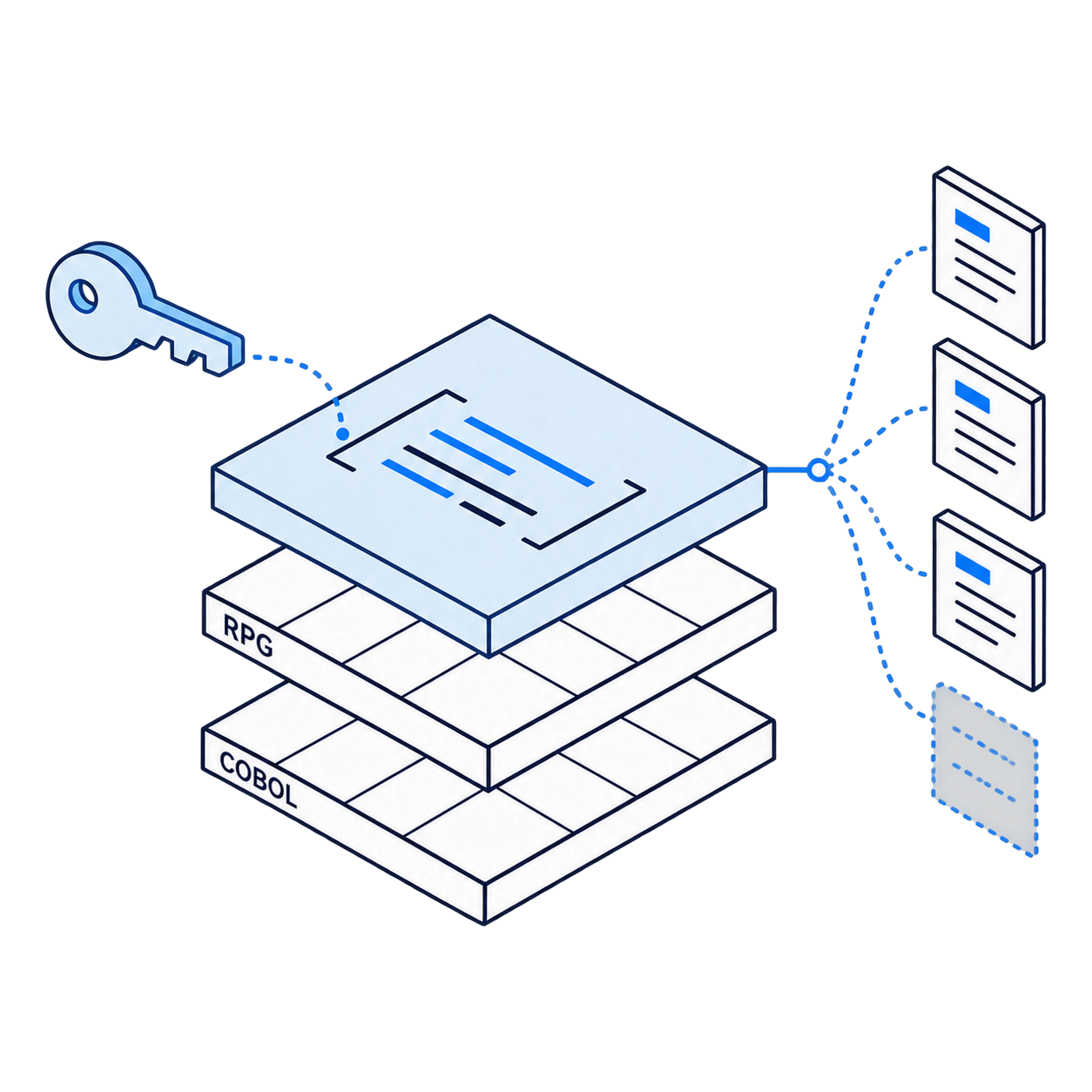
IBM's platform packages give Bob specific knowledge of these systems, so upgrades and changes to RPG or COBOL programs start from the right context. Your specialists still approve every change.
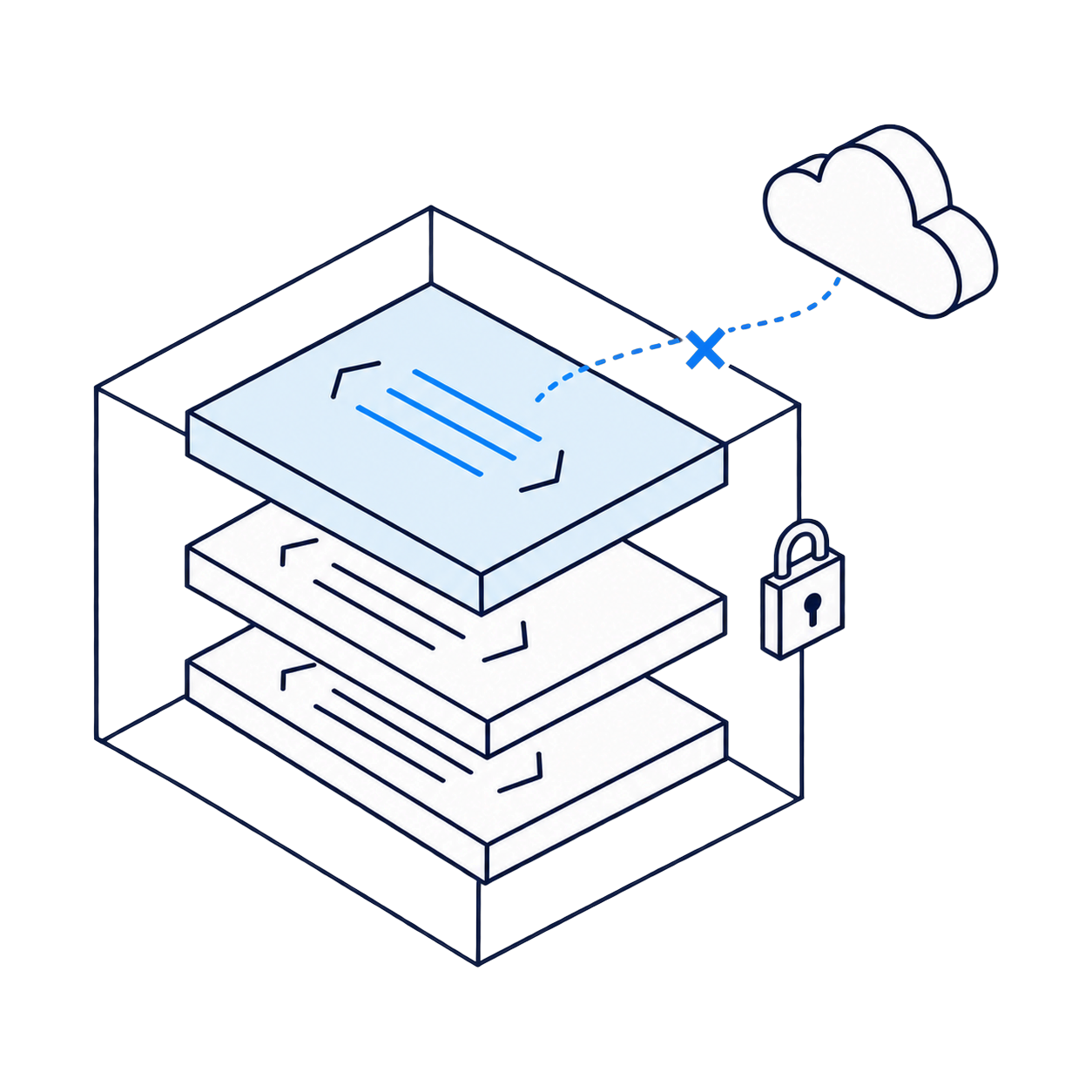
Use Bob in IBM's cloud, or run it on-premises on infrastructure you control, including networks with no internet connection.
Your people stay in charge of every change, and AI handles the slow reading and checking around it.
See how adoption works →Many teams already use AI on new projects. They get stuck when they try it on older, regulated, or business-critical applications.
Banks, insurers, and public-sector organizations often forbid sending code to an outside AI service. Teams end up with a ban, or with tools nobody approved.
We match each application to IBM's cloud or to an on-premises setup that meets your rules.
Every change waits for the same people, and some of them are close to retirement. When they leave, the rules they never wrote down leave with them.
Bob explains and documents core programs, and your specialists check the result.
Version upgrades and test coverage compete with visible business work for the same developers, so they slip quarter after quarter.
We run upgrades as small, reviewable pieces of work, with tests and a record of what changed.
Some people try an assistant, results vary, and nobody can show leadership what improved. Licences renew without a real decision.
We measure a pilot against how your team works today, then roll out shared practices to the whole team.
Because security limits, missing documentation, and upgrade backlogs reinforce each other, GrandView starts with a pilot on your actual code before recommending a deployment architecture.
Developers use Bob the same way in every option. What changes is where Bob runs and where your code goes while the AI works on it.
| Option | When it fits | Where your code goes | What your team takes on |
|---|---|---|---|
| 01 IBM's cloud | Your policies allow IBM to process the code | IBM's cloud service | Managing users and usage budgets |
| 02 On-premises, with your approved AI provider | You must host the system yourself and already use an approved AI service in your cloud account | To that AI service, under your existing contracts | Running Bob on your own platform, with GrandView's help |
| 03 Fully on-premises, no internet connection | Code may not leave your network at all | It stays inside your network | Running Bob and the AI model on your own servers |
Since September 2026, organizations can run IBM Bob on their own infrastructure, which IBM calls the self-hosted option. It suits teams whose code cannot leave the company, and IBM sells it through its sales team and Business Partners.
Where each application's code is allowed to go
Whether your current platform can host Bob, or what needs to be added
Which AI model fits: one from your approved cloud provider, or one that runs on your own servers
How people sign in and how your security team monitors the system, using tools you already have
You can test Bob on a small, single-server setup with one team before planning a full installation.
If your systems run only on IBM Power servers and your team is small, on-premises means buying and running a new platform. In that case we usually start in IBM's cloud with code you are allowed to share, and look at on-premises later.
Engineering, architecture, platform, and security leaders review the same pilot results, so the rollout decision rests on shared evidence.
Show what AI actually changed for the team
Developers use different assistants, results vary, and nobody can show what improved.
A pilot measured on your code, plus shared practices and budgets for each team.
Plan modernization from code you understand
Decisions on what to keep, wrap, or rewrite rest on guesses about undocumented logic.
Bob's analysis and documentation feed the workload-by-workload plan we use in our Modern Mission Critical practice.
Depend less on a few RPG and COBOL experts
Every change to core programs waits for the same few people.
Bob explains, documents, and drafts the change. Your experts review and approve it.
Say yes to AI on your terms
The choice is a blanket ban or tools nobody approved.
A setup your policies allow, sign-in through your directory, and a record of what the AI did.
The pilot evaluates your code, security rules, and team practices before recommending a cloud or on-premises deployment.
See how adoption works ↓The pilot shows what Bob does on your code. Where it runs and how it rolls out follow from those results and your security rules.
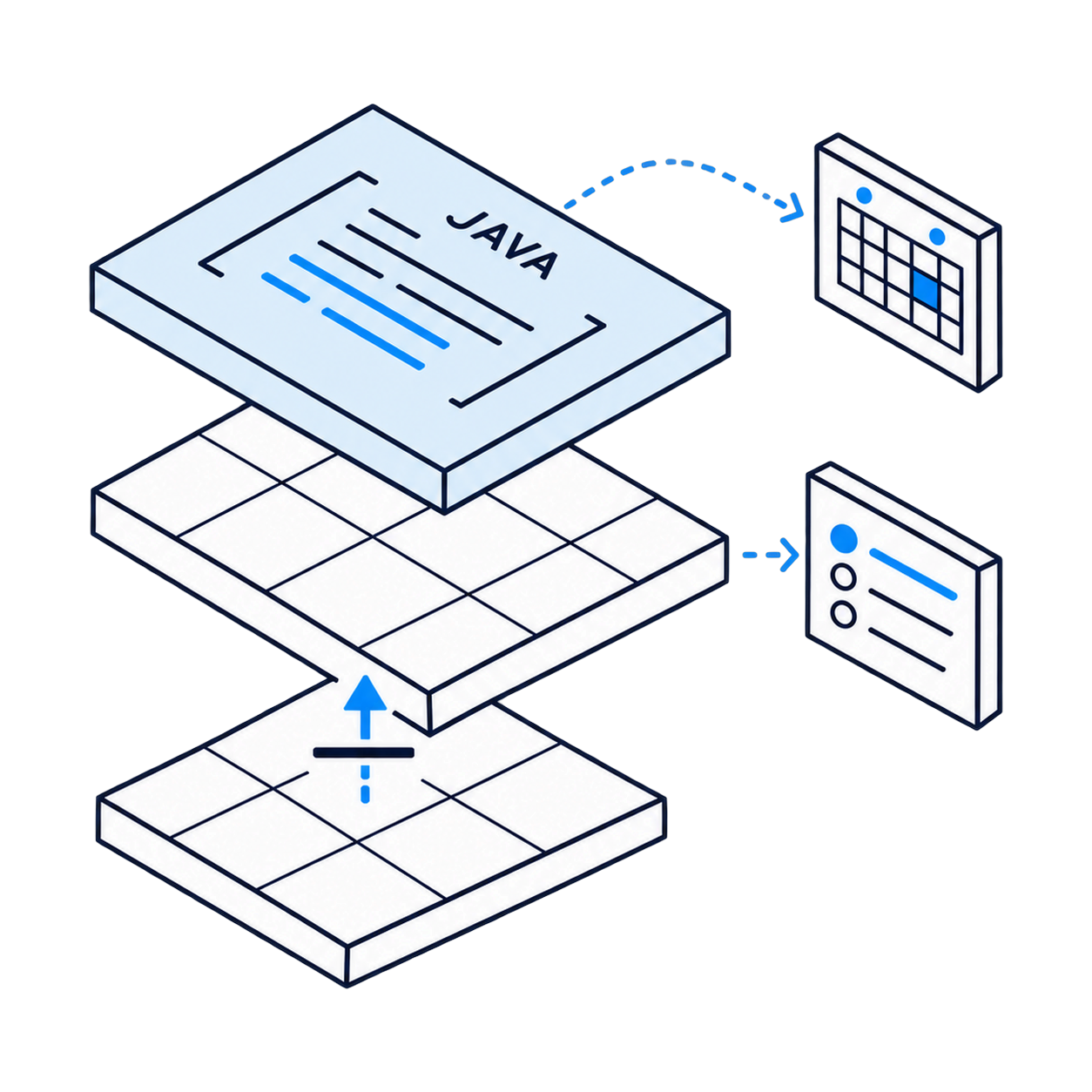
We pick one application and a few tasks, such as documenting a core program, writing tests, or a Java upgrade, and compare the results with how your team works today.
Senior specialists test Bob on undocumented routines and assess output quality against historical effort.
We review your rules on where code may go, your current platform, and your AI options, then recommend a setup.
Choose SaaS, customer-cloud AI, or air-gapped on-premises with full LDAP integration and audit trails.
We set up shared instructions and approval settings, usage budgets per team, and IBM's platform packages where they help.
Developers get AI help, specialists retain approval authority, and leadership sees clear usage budgets.
The pilot answers two questions: does Bob help, and where should it run? Rollout and modernization work are planned after that.
Agree the application, tasks, reviewers, and how we will measure success. We benchmark the existing baseline so everyone knows what a successful outcome looks like.
Run the tasks with Bob, in IBM's cloud or on a small on-premises test setup, and record results against the baseline. Senior specialists review and approve all AI outputs.
Review results, the deployment choice, security controls, and expected costs with engineering and security leaders. The CISO and platform owners get the data they need to sign off.
Roll Bob out team by team and use it in modernization work, such as Java upgrades or IBM i and IBM Z programs. Integrates directly with our Modern Mission Critical systems practice →
Bring an application, a modernization backlog, or your security team's questions. GrandView brings automation and core systems expertise to help you test Bob on real code and work through deployment options.
Plan an IBM Bob pilot